Most buildable land in this part of Idaho arrives covered in timber, brush and glacial rock, and getting it ready is the first real cost of a build. We clear lots for houses, shops and barndominiums, open up pasture and driveways, take out brush and stumps, and deal with the rock instead of pretending it is not there.
Clearing well is mostly about what you leave behind. Anyone can knock trees over. Leaving a site that drains properly, keeps the mature trees you actually wanted, does not turn to soup in March, and can be built on without a second round of dirt work — that is the job.
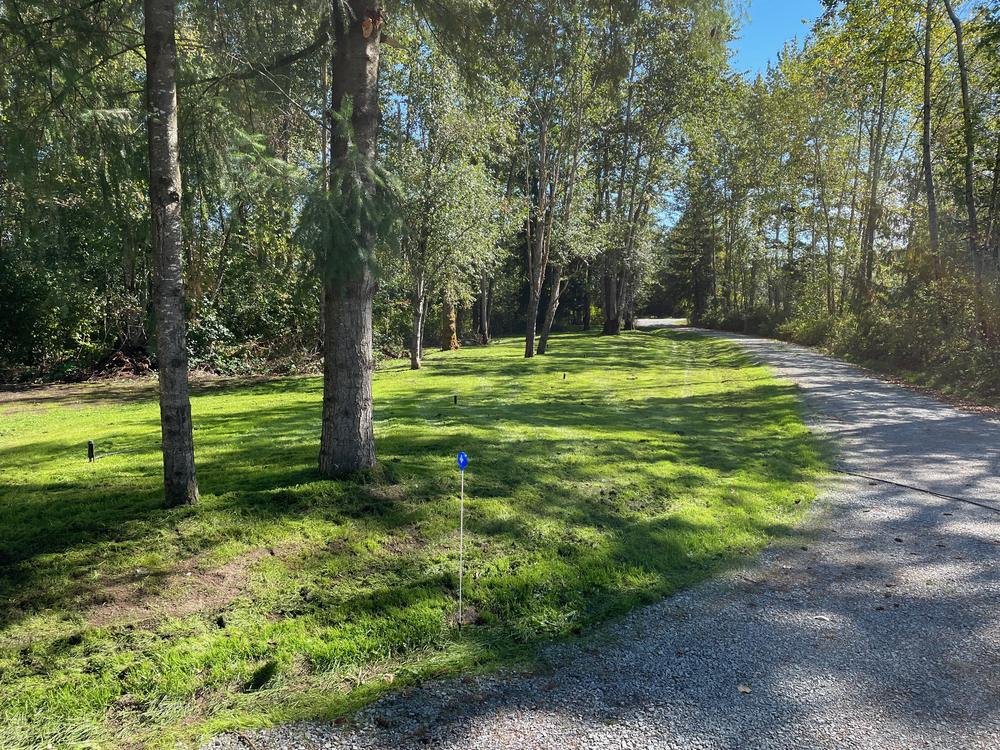
This is the part worth deciding before we start, because it changes the price and the schedule. Your options for slash, stumps and merchantable wood:
About burning. We will not promise to burn your slash, and you should be cautious of anyone who does. Outside city limits in Idaho, a free state burn permit is required from 10 May through 20 October, obtained through burnpermits.idaho.gov. Local fire districts layer their own requirements on top — Kootenai County Fire & Rescue asks to be notified of the location of any slash burn. Inside Sandpoint city limits a city permit is required year-round. And critically, Selkirk Fire's published rules prohibit the burning of construction debris and commercial trade waste by homeowners and contractors alike. Depending on how a job is structured, contractor-generated debris can fall in that category. We will tell you honestly which route is available on your site.
Clearing a residential lot in Kootenai County generally does not need a standalone land clearing permit. What can trigger a permit is the dirt work that goes with it. Kootenai County requires a Site Disturbance Permit for grading and excavation, with exemptions that cover most straightforward jobs — including work under 50 cubic yards in a twelve-month period outside a stream buffer or shoreline area, and grading on sites under 10 percent slope more than 500 feet from surface water that disturbs less than a third of the parcel.
In practice: a flat Prairie lot well away from water is usually exempt. A sloped lot, a lakeside lot, or anything near a creek usually is not.
Bonner County works differently — it has had no adopted building code since 1997, but it does require stormwater and erosion control submittals for construction within 300 feet of any lake, slough, pond, river or stream, within 300 feet of a slope of 15 percent or greater, and for excavation moving more than 50 cubic yards.
Two more that catch people out. If you disturb one acre or more, a construction stormwater permit through Idaho DEQ applies — that threshold is federal in origin and it is real. And if commercially merchantable timber is being removed and sold off a conversion, a notification to the Idaho Department of Lands is required under the Forest Practices Act. Non-commercial cutting for your own use is exempt.
On the Rathdrum Prairie you are in Missoula Flood deposits — poorly sorted angular cobbles and boulders, sometimes armouring the middle of the old flood path. Digging is fast right up until it is not. Bedrock is generally deep mid-Prairie, where the valley fill runs hundreds of feet, but comes up close to the surface around the perimeter where the ground narrows against the mountains.
We would rather flag a boulder field on the walkthrough and price it than discover it on day three and hand you a change order. If a site looks like it may hide rock, we will say so before you sign anything.
The clearing, the driveway and the septic drain field all want the same flat, well-drained part of your property, and they cannot all have it. Doing them as one plan rather than three separate jobs saves real money.
Practically, that means we walk the site thinking about where the drain field has to sit under Panhandle Health District's setbacks, where the driveway can hold a grade and shed water, where the house pad wants to be, and which trees are worth the extra effort to save. Then we clear to that plan.
Permit thresholds cited here come from Kootenai County Code Article 7.1/8.7.101, Bonner County Revised Code 12-720, Idaho DEQ's construction stormwater permitting, the Idaho Department of Lands burn permit program and Forest Practices Act guidance, and published fire district rules. Requirements change and vary by parcel — we confirm what applies to your site before we start.
Usually not for the clearing itself. Kootenai County has no standalone land clearing permit, but the grading and excavation that goes with it can require a Site Disturbance Permit. Common exemptions cover under 50 cubic yards in a twelve-month period outside stream buffers, and grading on sites under 10 percent slope more than 500 feet from surface water disturbing less than a third of the parcel. A separate Idaho DEQ stormwater permit applies once you disturb one acre or more.
You choose. Material can be piled for firewood, chipped, burned where the season and local fire district rules allow, buried in an approved spot on site, or hauled off. Hauling off is the cleanest and the most expensive because you are paying for trucking and disposal.
Sometimes, and it depends on where you are and the time of year. Outside city limits a free Idaho Department of Lands burn permit is required from 10 May through 20 October, and local fire districts add their own requirements. Some jurisdictions prohibit contractors from burning debris generated by their work. We will tell you honestly which options are available on your site rather than promising something we cannot legally do.
On the Rathdrum Prairie you are in Missoula Flood gravels — cobbles and boulders that are unpredictable and can be substantial. Bedrock is generally deep mid-Prairie but comes near the surface around the edges where the valley narrows. We flag likely rock during the walkthrough and price it up front rather than handing you a change order later.
Yes, and it saves money. The clearing, the driveway and the septic drain field all want the same flat, well-drained ground, and they cannot all have it. Planning them together means we clear to a layout that works for Panhandle Health District's drain field setbacks and for a driveway that sheds water, rather than redoing dirt work later.
Get a free, no-obligation estimate. Honest pricing, clear timelines, and work you can count on.
Get My Free Estimate